
Backlinks: The Backbone of SEO Success
Jump to a Section
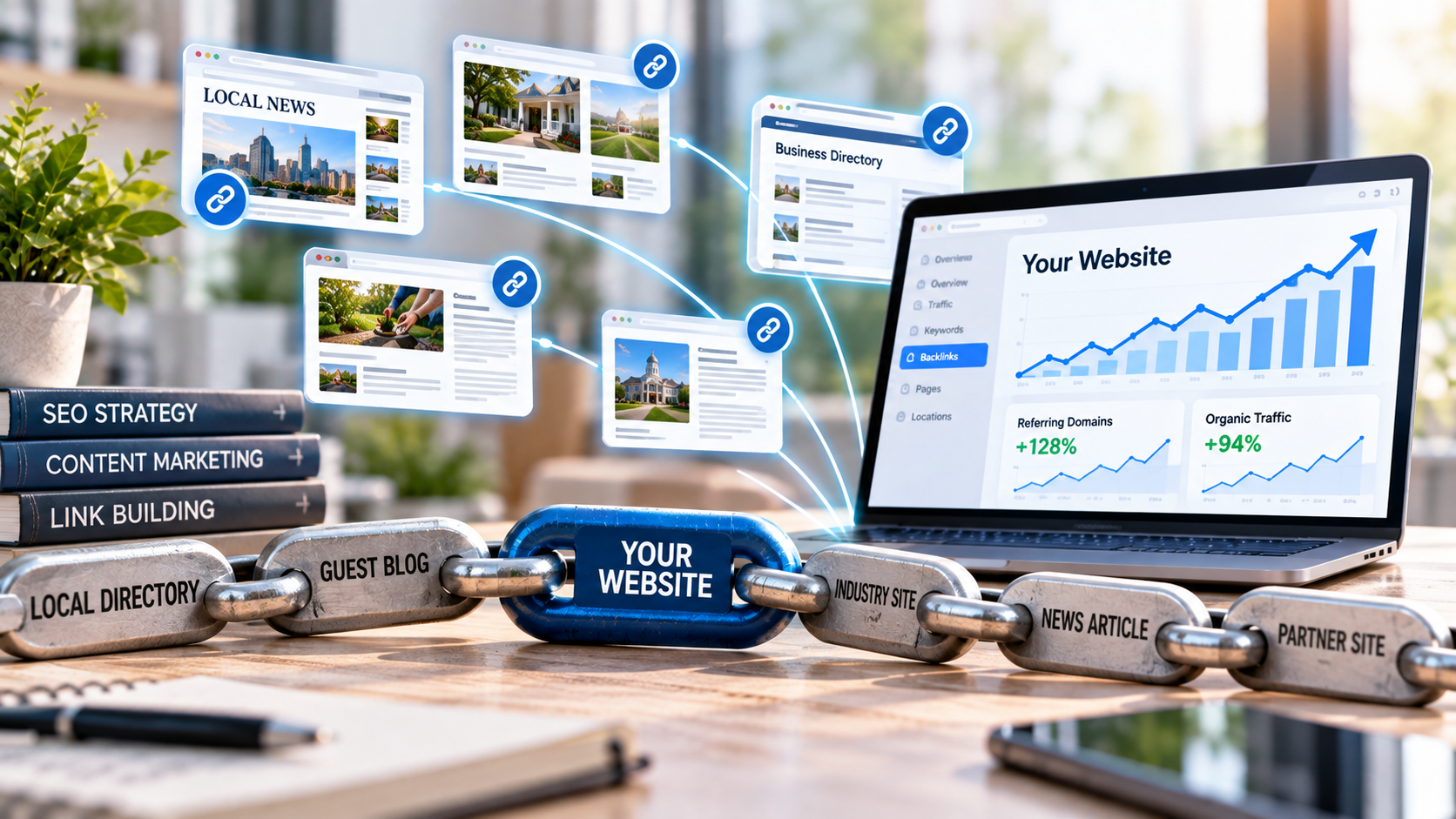
Backlinks remain one of the most important concepts in search engine optimization. When another website links to yours, that link can help Google discover pages, understand relationships between websites and topics, evaluate authority, and determine which pages may be useful to searchers.
But modern link building is considerably more sophisticated than simply accumulating as many links as possible.
A relevant editorial link from a respected industry publication, local news organization, supplier, chamber of commerce, university, or trusted resource can be far more meaningful than hundreds of links created on unrelated or low-quality websites.
The goal is therefore not “get the most backlinks.” The goal is to build a web presence that other legitimate websites have genuine reasons to reference.
Yes. Google confirms that link analysis and PageRank remain part of its core ranking systems. Links can help Google discover pages, understand relationships between content, and evaluate which pages may be useful and authoritative.
However, backlinks are only one part of Google's broader ranking systems. Content quality, relevance, search intent, technical SEO, page experience, competition, and many other signals also influence search performance.
What Are Backlinks?
A backlink is simply a hyperlink from another website pointing to a page on your website.
If a local newspaper writes about your company and links to your website, you have earned a backlink.
If your Chamber of Commerce lists your business and links to your site, that is also a backlink.
If an industry publication references a useful guide you created and links to that guide as a source, that is another backlink.
Links are fundamental to the web because they connect documents, organizations, sources, businesses, ideas, and resources.
External Backlink
Another website links to your website. This is usually what people mean when discussing backlinks in SEO.
Outbound Link
Your website links to another website, often to cite a source, recommend a resource, or provide useful additional information.
Internal Link
One page on your own website links to another page on the same site, helping users and search engines understand your site's structure.
Backlinks are not merely SEO decorations. They are part of the underlying structure of the web and can send both search engines and real visitors from one useful resource to another.
Why Backlinks Matter to Google
Google's original search engine became famous in part because of PageRank, a system that analyzed links between webpages rather than relying only on the words appearing on each page.
Search has evolved tremendously since then, but links have not disappeared from the equation.
Google currently states that its ranking systems include link analysis and PageRank .
Google also uses links to discover pages to crawl and says links can help it determine the relevancy of pages.
Links Can Provide Context
If respected plumbing resources consistently reference a particular plumbing guide, that relationship provides context about what the linked page is about.
Links Can Indicate Authority
A page that earns legitimate references from recognized publications, organizations, experts, universities, industry groups, and other trusted resources may demonstrate a stronger reputation than a page nobody on the web ever references.
Links Help Google Discover Content
Search engines crawl the web partly by following links. Good internal and external link structures make it easier to discover connected resources.
Backlinks Are Not Google's Entire Ranking System
Links are important, but Google's search systems evaluate many signals. A page with stronger backlinks does not automatically outrank every competitor. Relevance, content quality, intent, freshness where appropriate, page-level signals, technical accessibility, and other factors still matter.
Backlink Quality Matters More Than Raw Quantity
One of the oldest mistakes in SEO is reducing backlink strategy to a number.
Fifty links are not automatically better than ten.
Five hundred links are not automatically better than fifty.
The source, relevance, context, placement, legitimacy, and reason the link exists all matter.
Relevant Editorial Link
A regional news outlet publishes a story about your company, discusses what your business actually does, and naturally links to your website as a useful source.
Random Directory Blast
An automated service creates hundreds of links on unrelated, low-quality websites that exist primarily to publish links rather than provide useful information.
Those two links should not be treated as equivalent simply because each adds “one backlink” to an SEO report.
Backlink count is a measurement—not a strategy. The objective is to earn links that make sense for your business, audience, industry, geography, and content.
What Makes a High-Quality Backlink?
No single metric determines whether a backlink is valuable. A strong link usually combines several useful characteristics.
Relevance
The linking website, page, and surrounding content should have a logical relationship to your business or the resource being referenced.
A construction-industry association linking to a contractor is naturally relevant. A random overseas recipe directory linking to the same contractor probably carries far less contextual meaning.
Editorial Legitimacy
Strong links often exist because a publisher, journalist, organization, business, or writer independently decided that your page was useful enough to reference.
Source Quality
Established websites with real audiences, legitimate organizations, quality editorial standards, and their own trustworthy web presence are generally more meaningful than sites created primarily to sell or distribute links.
Context
A naturally placed link inside relevant editorial content can provide considerably more context than a link hidden in an enormous unrelated list.
Appropriate Destination
Not every link should point to the homepage.
If another website is discussing a detailed research article, guide, service resource, case study, or local project, linking directly to the most relevant page often provides the best experience.
Real Audience Value
Ask a simple question:
Would this link still be valuable if Google did not exist?
If the answer is yes because the link can create referral traffic, credibility, exposure, partnerships, or customers, it probably has genuine marketing value beyond its SEO implications.
↑ Back to TopBacklinks Are Also a Marketing and Branding Tool
Some businesses evaluate links only through rankings.
That ignores several other benefits.
Referral Traffic
Readers can click the link and visit your website directly, introducing your business to an already relevant audience.
Brand Visibility
Being referenced by respected websites places your business in front of audiences who may never have encountered it otherwise.
Credibility
Mentions from reputable organizations, media outlets, partners, and industry resources can reinforce trust with prospective customers.
A backlink from a highly relevant site may therefore have value even if you cannot isolate a measurable ranking increase from that one link.
It can drive visitors, create branded searches, introduce potential customers, establish relationships, create new references, and support a broader marketing ecosystem.
That is also why traffic should be evaluated according to quality rather than raw numbers. Our guide to website traffic and engagement explains why qualified traffic and conversions matter more than simply inflating visitor counts.
↑ Back to TopHow Do You Build High-Quality Backlinks?
The best link-building strategies give another website a legitimate reason to reference your company or content.
Create Content Worth Referencing
Detailed guides, original research, industry data, calculators, checklists, case studies, useful graphics, statistics, and genuinely helpful resources give other publishers something worth linking to.
Build Real Business Relationships
Suppliers, manufacturers, professional organizations, complementary businesses, chambers, community organizations, and legitimate partners can create natural opportunities for web references.
Pursue Media and PR Opportunities
Local news coverage, trade publications, expert interviews, industry commentary, podcasts, television segments, and journalist requests can create valuable editorial mentions.
Join Legitimate Organizations
Chambers of commerce, industry associations, licensing organizations, professional groups, and local business organizations can provide both credibility and relevant citations or links.
Sponsor Real Community Activities
Events, nonprofit organizations, sports teams, festivals, educational programs, and community partnerships can create real exposure while sometimes also generating legitimate local web mentions.
Contribute Genuine Expertise
Expert commentary, interviews, educational articles, quotes, and contributed content can build both authority and relationships when the primary purpose is to provide value rather than manufacture a ranking link.
Promote Great Content
Publishing something valuable is only the first step. Relevant organizations, writers, journalists, customers, suppliers, and partners need to know the resource exists before they can choose to reference it.
Link Earning and Link Building Often Overlap
Great content may earn links naturally, but promotion matters too. There is nothing wrong with telling relevant people that a genuinely useful resource exists. The distinction is whether the link is being earned because the resource has value or manufactured primarily to manipulate search rankings.
Local Backlinks Can Be Especially Valuable for Local SEO
A local business does not need every backlink to come from a nationally famous publication.
Links from legitimate organizations within the same geographic market can create valuable local context.
Examples include:
- Local chambers of commerce
- City or regional news organizations
- Community organizations
- Local charities
- Festivals and event websites
- Trade associations
- Local suppliers
- Business partnerships
- Schools and educational institutions
- Local sponsorships
These links can reinforce the relationship between the business and the community it actually serves.
That broader authority can also complement the signals surrounding Google Business Profile visibility. We discuss the larger local strategy in How to Rank in Google's Local Map Pack .
Relevance can be topical, geographic, or both. A respected local organization may be highly valuable to a local business even if it is not a globally recognized website.
Does Guest Blogging Still Work for Backlinks?
Guest contributions are not inherently bad.
A business owner, technician, attorney, accountant, contractor, marketer, or other expert can legitimately contribute educational content to an industry publication or relevant website.
Problems arise when guest posting becomes a mass-produced link scheme.
Expert Contribution
A credible industry publication invites or accepts a useful article from a real expert because the content provides value to its readers.
Mass Link Placement
Hundreds of low-value articles are distributed across unrelated sites primarily to place keyword-rich backlinks and manipulate rankings.
The difference is intent, quality, relevance, editorial standards, and scale.
↑ Back to TopLink Building Can Go Wrong: Understanding Link Spam
Because backlinks can influence search rankings, they have also been heavily manipulated throughout the history of SEO.
Google specifically identifies link spam as links created primarily for the purpose of manipulating search rankings.
Examples can include:
- Buying links that pass ranking credit
- Selling ranking links
- Automated link-building programs
- Excessive reciprocal-link schemes
- Low-quality directory or bookmark links
- Keyword-rich links distributed through widgets
- Large-scale optimized links in guest posts or press releases
- Forum-comment spam
- Creating low-value content primarily to generate links
Google's current Search spam policies explain these practices in considerably more detail.
A Sudden Increase in Links Is Not Automatically a Penalty
A company can legitimately receive many backlinks very quickly because it appears in national news, publishes major research, launches a popular product, goes viral, or receives widespread industry coverage.
The real concern is not simply speed. It is whether the links appear to have been created primarily to manipulate ranking systems.
If you are concerned that questionable SEO tactics may have created a larger problem, see our guide to Google penalties and manual actions .
↑ Back to TopWhat About Nofollow, Sponsored and Paid Links?
Not every commercial relationship involving a link violates Google's policies.
Businesses advertise online. Companies sponsor organizations. Influencers work with brands. Publishers sell advertising. Affiliate relationships exist throughout the web.
The important distinction is whether a commercial link is being disguised as an editorial endorsement for the purpose of passing ranking credit.
Google recommends qualifying appropriate links with attributes such as:
- rel="sponsored" for paid or sponsored links
- rel="nofollow" when appropriate
A qualified sponsored link can still have legitimate marketing value. People can see the mention, discover the company, visit the site, and become customers even if the relationship is not intended to influence rankings.
SEO value is not the only value a link can have. Referral traffic, brand exposure, credibility, customer acquisition, and partnerships can all make a link worthwhile.
How Do Backlinks Relate to Domain Authority?
Backlinks are closely associated with third-party authority metrics such as Domain Authority and similar scores offered by SEO platforms.
Those tools attempt to estimate the strength of a site's backlink profile and its relative ability to compete in search.
They can be useful for competitive analysis—but they are not Google scores.
Google does not look at a website's third-party Domain Authority number and then decide where the website should rank.
The more useful approach is to focus on the underlying assets:
- Relevant links
- Quality referring domains
- Strong content
- Real brand mentions
- Topical relevance
- Legitimate authority
We explain that distinction further in How Important Is Domain Authority? .
↑ Back to TopHow Should You Evaluate Your Backlink Profile?
Backlink reports can include an overwhelming amount of data. The goal is to focus on measurements that reveal something useful.
Referring Domains
Look at how many distinct websites link to you rather than focusing only on the total number of links. One website may create hundreds of links from navigation, archives, or templates.
Topical Relevance
Determine whether linking sites have a logical relationship to your industry, content, audience, or geographic market.
Link Destination
Analyze which pages earn links. A healthy site may attract links to guides, tools, research, location resources, service pages, and the homepage for different reasons.
Referral Traffic
Links that actually send relevant visitors can be particularly useful because they create measurable marketing value in addition to any search benefit.
New and Lost Links
Monitoring changes can reveal successful PR campaigns, content that is naturally earning references, broken links, site migrations, or partnerships that disappeared.
Competitor Link Gaps
Study where legitimate competitors are earning meaningful links that your business does not yet have.
This can uncover:
- Industry organizations
- Local publications
- Supplier relationships
- Useful directories
- Content opportunities
- Community partnerships
- Trade publications
Do Not Judge a Link Only by One SEO Metric
Third-party authority scores can help with screening and comparison, but a link's relevance, audience, legitimacy, context, and actual marketing value should also influence how you evaluate it.
Backlinks Work Best as Part of a Complete SEO Strategy
A powerful backlink profile cannot compensate indefinitely for a poor website.
Links work best when they support pages that already deserve visibility.
That means combining backlink development with:
- Strong service and product pages
- Helpful informational content
- Technical SEO
- Internal linking
- Search-intent alignment
- Good page experience
- Local SEO where appropriate
- Reviews and reputation
- Conversion-focused website design
Top Fin Marketing approaches link acquisition within that larger system rather than treating backlinks as an isolated trick. Learn more about our Search Engine Optimization services .
Backlinks amplify strong SEO—they do not replace it. The ideal strategy combines pages worth ranking with a web presence that gives other legitimate organizations reasons to reference them.
Frequently Asked Questions
Are backlinks still important for SEO?
Yes. Google confirms that PageRank and link analysis remain part of its core ranking systems. Backlinks are not the only ranking factor, but legitimate links remain an important component of SEO.
How many backlinks do I need to rank?
There is no universal number. The amount and quality of competition varies dramatically by keyword, industry, geographic market, page, and search intent. Ten excellent links may be more useful than hundreds of weak ones.
Is one backlink from a strong site better than many weak links?
Often, yes. A highly relevant editorial link from a reputable source can provide much more meaningful context and authority than large numbers of unrelated low-quality links. However, link value cannot be reduced to a simple one-versus-one formula.
How long does a backlink take to affect rankings?
There is no fixed timeline. Google first needs to discover and process the link, and the eventual effect depends on the page, query, competition, linking source, broader site quality, and many other ranking signals. Referral traffic from the link can begin much sooner than any measurable search change.
Can getting backlinks too quickly hurt SEO?
Speed alone is not necessarily a problem. Legitimate publicity can produce many backlinks very quickly. The concern is whether the links were artificially created primarily to manipulate search rankings.
Is buying backlinks against Google's rules?
Buying links for the purpose of passing ranking credit can violate Google's link-spam policies. Paid advertising and sponsorship links can exist legitimately when they are appropriately qualified rather than disguised as editorial ranking endorsements.
Are nofollow backlinks worthless?
No. A nofollow link can still send qualified referral traffic, create brand exposure, introduce customers, generate additional mentions, and provide legitimate marketing value even when you are not relying on it to pass ranking credit.
Do directory links still help?
Legitimate directories can be useful when they are relevant to the business, industry, or geographic market. Low-quality directory networks created primarily to generate ranking links are a different matter and can fall under Google's link-spam policies.
Does guest blogging still work?
Genuine expert contributions to relevant publications can create valuable exposure and legitimate links. Large-scale guest-post campaigns designed primarily to distribute optimized backlinks are much riskier.
Do local businesses need backlinks?
Backlinks can be especially useful for local businesses because links from local newspapers, chambers, community organizations, suppliers, associations, and other regional sources can contribute to broader prominence and authority.
Should every backlink point to my homepage?
No. Natural backlink profiles often point to many different pages. Another site should generally link to whichever page is most relevant to the context of the reference.
Can backlinks help a multi-location business?
Yes. Brand-wide links can strengthen the broader domain, while each location may also benefit from legitimate local links such as chambers, local publications, community organizations, sponsorships, and market-specific partnerships.
Final Thoughts: The Best Backlinks Represent Real Authority
Backlinks remain one of the foundational elements of SEO, but modern link building should look very different from the volume-driven campaigns of years past.
Google still uses link analysis. PageRank still exists. Websites still benefit from being referenced by credible sources.
But a backlink strategy should not be reduced to purchasing packages, chasing arbitrary link counts, or placing optimized anchor text anywhere that will accept it.
The strongest links tend to come from the same activities that build a strong business and a strong brand:
- Creating genuinely useful resources
- Building real industry relationships
- Participating in the community
- Earning media attention
- Demonstrating expertise
- Joining respected organizations
- Producing information worth citing
Those links can strengthen search visibility, generate traffic, increase credibility, and help more people discover your business.
That is why backlinks remain such an important part of a complete SEO strategy.
Need a Stronger Backlink and SEO Strategy?
Top Fin Marketing evaluates backlinks as part of the complete search ecosystem. We look at referring domains, competitor link gaps, local authority opportunities, content, technical SEO, internal linking, Google visibility, reputation, and the quality of the pages those links ultimately support.
Our goal is not simply to make the backlink number in an SEO report go up. It is to build the kind of authority, relevance, traffic, and visibility that can actually help your business grow.
Learn more about our Search Engine Optimization services or contact us to discuss your current backlink profile and competitive opportunities.
Contact Top Fin Marketing